
“November to May is the ideal time to enjoy a perfect blend of leisure and adventure.”
- Trip Type : Fixed Group + Private
- Activities : Spiritual Treks, Spiritual+Adventure Treks
Enquiry Form for Winter Spiti
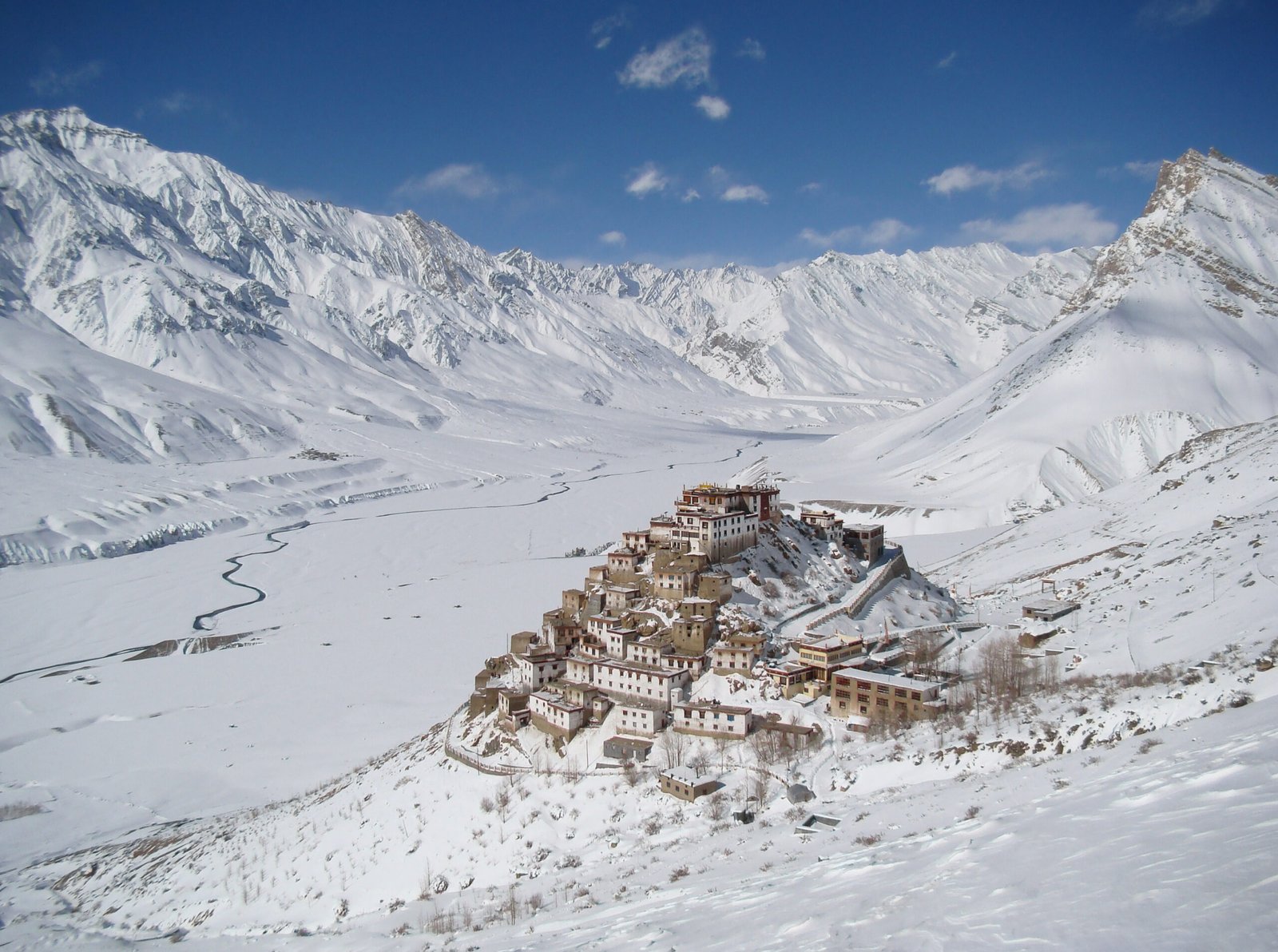
A 7N/8D winter road trip covering Spiti Valley with snow landscapes, monasteries, and remote Himalayan villages.
Duration
A 7N/8D winter road trip covering Spiti Valley with snow landscapes, monasteries, and remote Himalayan villages.
- Delhi → Shimla → Sangla
- Kalpa → Tabo → Kaza
- Explore Key Monastery, Kibber, Langza
- Return via Kalpa → Delhi
- Transportation
- Accommodation (hotels/homestays)
- Meals
- Trip coordination
- Personal expenses
- Entry fees
- Insurance
- Anything not mentioned
Gallery
FAQ
Find answers to your questions before joining a tour so that you can find out exactly what you want to know. If you have more question please feel free to reach us via contact form.
How many days is the Winter Spiti trip? The Divine Trail Winter Spiti trip runs 8 days and 7 nights. Access in winter is by the Shimla and Kinnaur route, since the Manali side closes for the season, and the road journey to Kaza alone takes about two days each way.
The Divine Trail Winter Spiti trip runs 8 days and 7 nights. Access in winter is by the Shimla and Kinnaur route, since the Manali side closes for the season, and the road journey to Kaza alone takes about two days each way.
How cold does Spiti get in winter?Spiti in winter regularly falls below minus 20 degrees Celsius and can reach about minus 30 at night. December to March is the winter window, when the valley sits under deep snow and sees very few visitors, which is much of the reason to go.
Spiti in winter regularly falls below minus 20 degrees Celsius and can reach about minus 30 at night. December to March is the winter window, when the valley sits under deep snow and sees very few visitors, which is much of the reason to go.
How do I reach Spiti in winter?Winter access to Spiti is by the Shimla and Kinnaur route, since the Manali road closes for the season. Trips start from Shimla, Chandigarh or Delhi and take about two days by road to reach Kaza. Roads can close after snowfall, so the itinerary carries flexibility.
Winter access to Spiti is by the Shimla and Kinnaur route, since the Manali road closes for the season. Trips start from Shimla, Chandigarh or Delhi and take about two days by road to reach Kaza. Roads can close after snowfall, so the itinerary carries flexibility.
What places does the Winter Spiti trip cover?The Winter Spiti trip covers Key Monastery, Kibber, the Chicham Bridge, Langza, Hikkim with the world’s highest post office, Komic, Dhankar and Tabo. Chandratal and the other high passes are closed through the winter months.
The Winter Spiti trip covers Key Monastery, Kibber, the Chicham Bridge, Langza, Hikkim with the world’s highest post office, Komic, Dhankar and Tabo. Chandratal and the other high passes are closed through the winter months.
Can I see snow leopards in Spiti? Winter is the best season for snow leopard sightings around Kibber, Chicham and Key, and some itineraries include a dedicated tracking day. Sightings are never guaranteed, since the animals are shy and move with their prey. Expect long waits in the cold.
Winter is the best season for snow leopard sightings around Kibber, Chicham and Key, and some itineraries include a dedicated tracking day. Sightings are never guaranteed, since the animals are shy and move with their prey. Expect long waits in the cold.
Where will I stay in Spiti in winter?Stays are local homestays and simple hotels, usually heated with a bukhari. Facilities are basic, and power cuts, frozen pipes and limited hot water are normal in winter. Mobile network and ATMs are limited through the valley, so carry cash.
Stays are local homestays and simple hotels, usually heated with a bukhari. Facilities are basic, and power cuts, frozen pipes and limited hot water are normal in winter. Mobile network and ATMs are limited through the valley, so carry cash.
Is altitude a concern on the Winter Spiti trip?Yes. Kaza sits at about 3,800 m and villages such as Langza and Chicham go higher, so altitude sickness is a real possibility. Acclimatise on arrival, stay hydrated and avoid rushing the first day at Kaza.
Yes. Kaza sits at about 3,800 m and villages such as Langza and Chicham go higher, so altitude sickness is a real possibility. Acclimatise on arrival, stay hydrated and avoid rushing the first day at Kaza.
What should I pack for Winter Spiti?Pack thermals, a heavy down jacket, snow boots, gloves, a woollen cap, sunglasses, sunscreen and personal medication for Winter Spiti. Sun glare off snow at this altitude is stronger than most travellers expect, so eye protection is not optional.
Pack thermals, a heavy down jacket, snow boots, gloves, a woollen cap, sunglasses, sunscreen and personal medication for Winter Spiti. Sun glare off snow at this altitude is stronger than most travellers expect, so eye protection is not optional.
The Ali Bedni Bugyal trek is rated easy to moderate and works well for beginners, thanks to its modest altitude, forgiving terrain and pleasant weather. The trek covers roughly 30 km in total. Some preparation such as regular walking or jogging beforehand still makes the days easier.
The Divine Trail Ali Bedni Bugyal trek runs 6 days and 5 nights. The base is Lohajung village in Chamoli district, about 10 to 12 hours by road from Rishikesh. The trail passes through forest and villages such as Didna before opening onto the meadows.
Bedni Top, the highest point of the Ali Bedni Bugyal trek, sits at about 12,550 ft, which is 3,825 m. The climb to it is spread across the trek rather than concentrated into one push, which keeps the altitude risk low for first time trekkers.
The Ali Bedni Bugyal trek crosses the twin meadows of Ali Bugyal and Bedni Bugyal, among the largest high altitude meadows in Asia. The sacred Bedni Kund lake sits on the route, and clear days bring views of Trishul, Nanda Ghunti and Nanda Devi.
The Ali Bedni Bugyal trek runs from about April to October. Late May and June bring wildflowers across the meadows, while September and October give the clearest skies and mountain views. Winter turns the meadows to snow, which is striking but considerably more demanding.
Accommodation on the Ali Bedni Bugyal trek combines homestays or guesthouses in villages such as Lohajung and Didna with alpine tents on the meadows. Tents are shared between two or three
The Divine Trail Ali Bedni Bugyal package includes meals through the trek, a trek guide with cook and support staff, transport from the pickup city, and accommodation in villages and tented camps. Personal expenses and anything outside the itinerary are charged separately.
Groups meet in Rishikesh for the Ali Bedni Bugyal trek. Jolly Grant Airport at Dehradun is about an hour away and Haridwar station is about 30 km away. Arrive the day before, and keep a two hour buffer before any onward train or flight on the return day.