


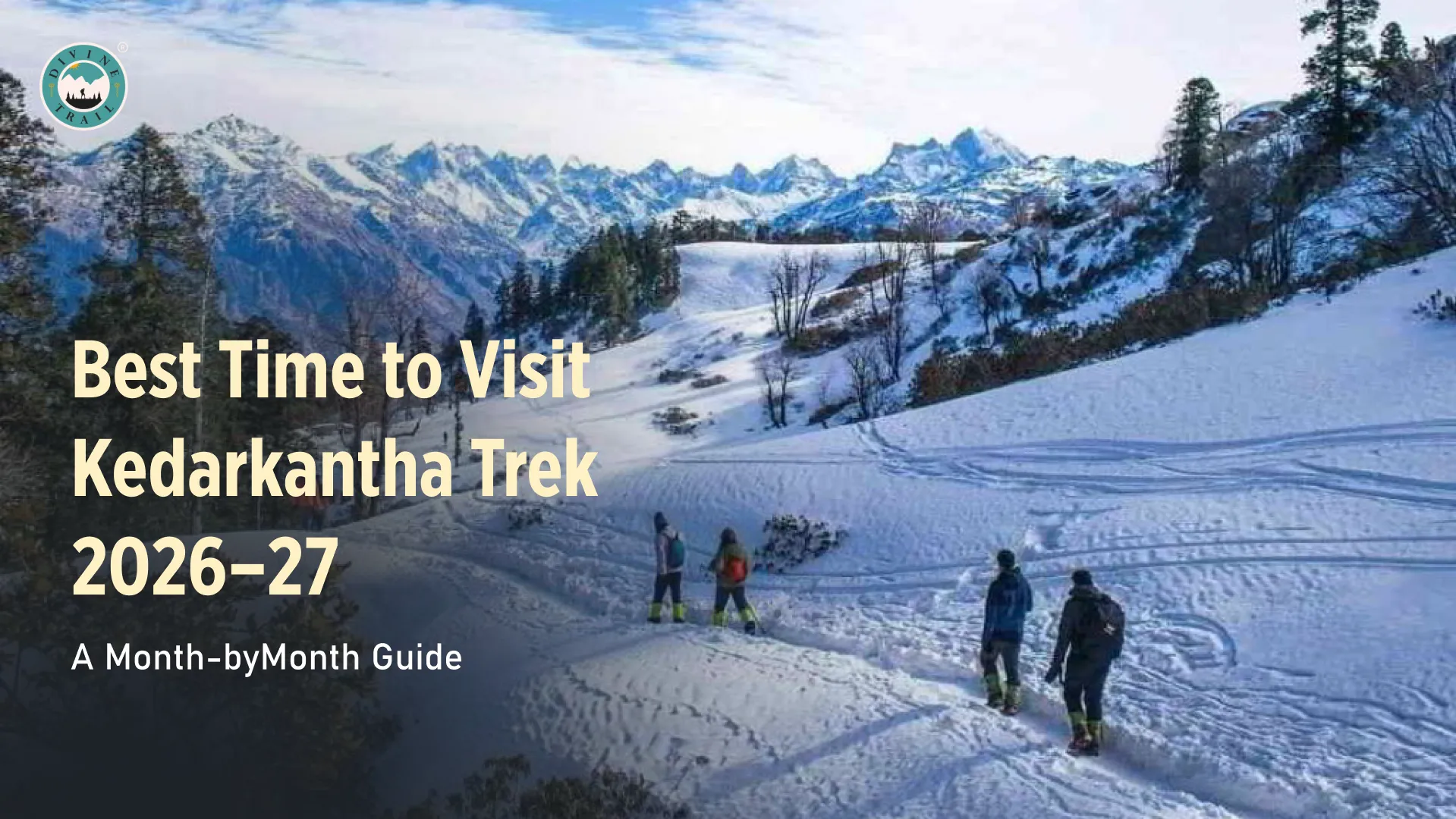
Best Time to Visit Kedarkantha Trek 2026–27: A Month-by-Month Guide
Kedarkantha · Planning
Quick answer: The best time to visit the Kedarkantha trek is December to February for the classic snow experience — January has the deepest snow. For clear skies and golden forests without deep cold, go in autumn (October–November). March–April gives a greener spring trek. Kedarkantha is open and worthwhile across all three windows; your choice depends on whether you want snow or views.
Kedarkantha changes character completely by season. Here’s a month-by-month breakdown so you can pick the right window for your 2026–27 trek.
| Season | Months | Day / Night temp | Experience |
|---|---|---|---|
| Autumn | Oct–Nov | 10–15°C / 0 to −5°C | Clear views, golden forests, little snow |
| Winter | Dec–Feb | 8–15°C / 0 to −10°C | Deep snow, snow camping (peak: January) |
| Spring | Mar–Apr | mild | Greener trails, melting snow, families |
Kedarkantha in winter (December–February) — the snow experience
This is the most popular window and what most trekkers come for. By December the trail from Juda-ka-Talab to the summit is blanketed in snow, and the campsites are whitewashed. January is the peak snow month. Nights at the higher camps drop to around 0 to −10°C, and December has the shortest daylight hours — so summit mornings start early. Crampons are used for the summit push. If snow is the goal, book December to February.
Kedarkantha in autumn (October–November) — clear views
Autumn brings out the colours of Kedarkantha. The post-monsoon air is crisp, the views are sharp, and the forests turn gold and brown. There’s little to no snow, so the trail is dry and easy underfoot and nights are milder (around 0 to −5°C). This is the right choice if you want the summit and the scenery without the deep-winter cold. See our best treks in October & November guide for the wider autumn season.
Kedarkantha in spring (March–April) — the greener trek
By March and April the heavy snow starts to melt and the lower trails green up, though higher sections can still hold snow. It’s a gentler, milder window that suits families and first-timers who want a lighter cold. Views remain excellent.
So which month should you choose?
Pick December–February for deep snow and snow camping, October–November for clear views with less cold, and March–April for a milder, greener trek. Whichever you choose, see the full route and 2026–27 dates on our Kedarkantha itinerary page, or compare it with the frozen-lake Brahmatal Trek in our best winter treks in India 2026–27 guide.
Frequently asked questions
What is the best time to visit the Kedarkantha trek?
December to February is the best time for the classic Kedarkantha snow trek, with January the peak snow month. Autumn (October–November) gives clear skies with little snow, and March–April offers a greener spring trek.
Is there snow on Kedarkantha in December?
Yes. By December the Kedarkantha trail from Juda-ka-Talab to the summit is usually covered in snow, making December to February the most popular window for the snow experience.
What is the temperature on the Kedarkantha trek?
In winter (December–February), daytime temperatures are around 8–15°C and nights drop to roughly 0 to −10°C at the higher camps. Autumn nights are milder, around 0 to −5°C.
Can you do the Kedarkantha trek in autumn?
Yes. Mid-September to November is a good time for Kedarkantha if you want clear post-monsoon views and golden forests without deep snow or extreme cold.
Which month has the most snow on Kedarkantha?
January typically has the deepest snow on Kedarkantha, with December and February also offering a full snow experience. December has the shortest daylight hours, so summit days start early.