


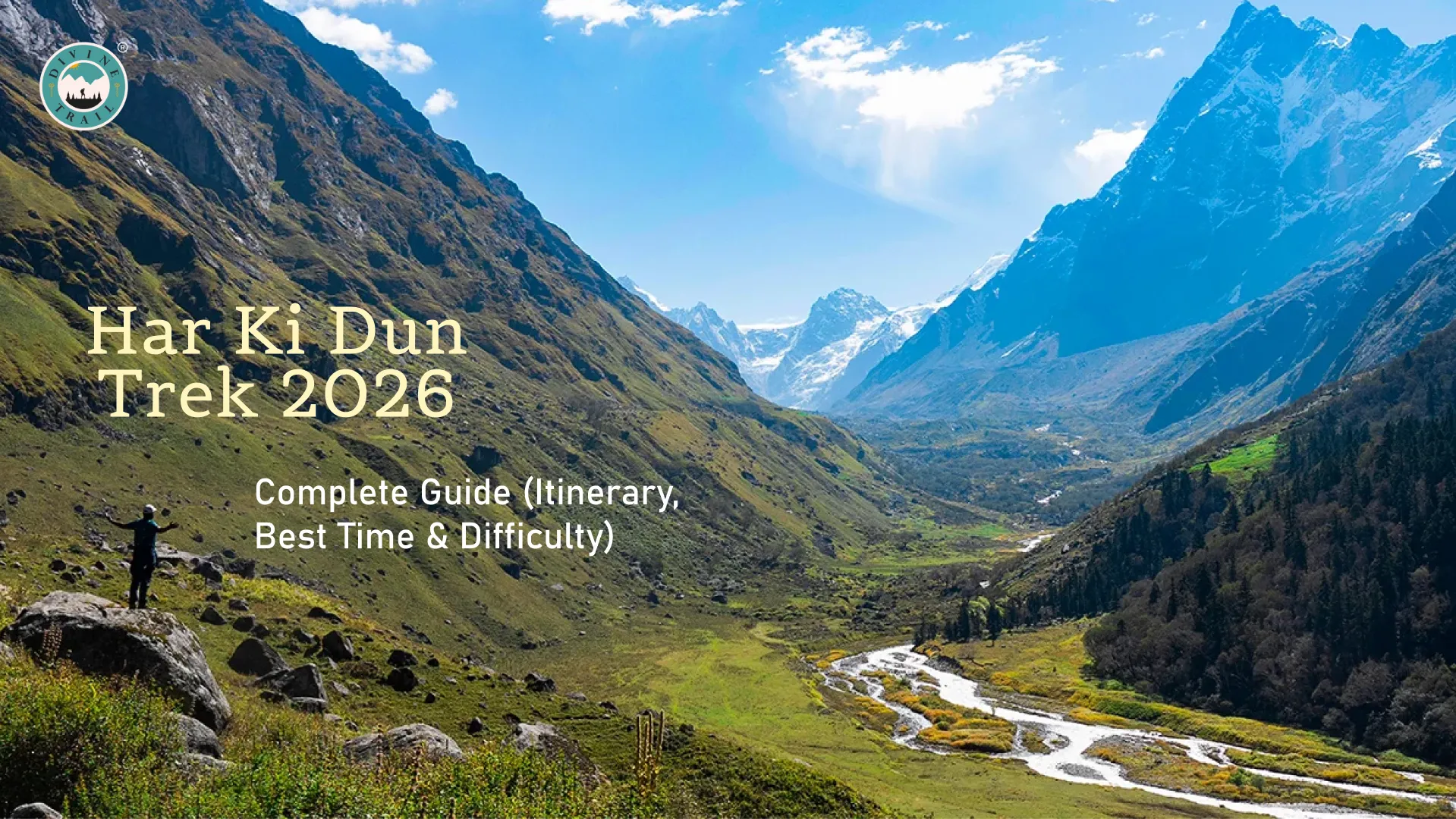
Har Ki Dun Trek 2026: Complete Guide (Itinerary, Best Time & Difficulty)
Autumn & Valley Trekking · Uttarakhand
Quick answer: The Har Ki Dun trek — the “Valley of Gods” — is a 6–7 day, easy-to-moderate valley trek to about 11,700 ft, starting from Sankri in Uttarakhand. It follows the Supin river through ancient Garhwali villages like Osla, ending below the Swargarohini massif. Best in autumn (September–November) for clear views and golden forests, and in spring (March–June) for greenery, with a winter snow option into December.
We run Har Ki Dun departures from our Dehradun base. Here’s the complete picture — altitude, itinerary, best time, difficulty and the legend behind the name.
| Detail | Figure |
|---|---|
| Max altitude (valley) | ~11,700 ft (3,566 m) |
| Base village | Sankri (~6,400 ft) |
| Duration | 6–7 days (travel included) |
| Trek distance | ~35–47 km round trip |
| Difficulty | Easy–Moderate |
| Best time | Sep–Nov (autumn) · Mar–Jun (spring) · into Dec (snow) |
| Region | Govind Wildlife Sanctuary, Uttarkashi |
What is the Har Ki Dun trek?
Har Ki Dun is a cradle-shaped hanging valley in the Govind Wildlife Sanctuary, reaching about 11,700 ft. The trek begins at Sankri — the same base as Kedarkantha — and walks up along the Supin river through some of Uttarakhand’s oldest inhabited villages, including Osla. The valley opens below the Swargarohini massif (Swargarohini I is 6,252 m), with side trips possible to Marinda Tal and the Jaundhar glacier.
Har Ki Dun trek itinerary (6–7 days)
- Day 1: Dehradun to Sankri (long scenic drive); overnight.
- Day 2: Drive to Taluka, trek to Seema/Puani Garat along the Supin river.
- Day 3: Trek to Kalkatiyadhar; first Swargarohini views.
- Day 4: Trek to Har Ki Dun valley (11,700 ft); explore / Marinda Tal.
- Day 5: Descend to Seema/Osla.
- Day 6: Trek back to Sankri.
- Day 7: Drive back to Dehradun.
Exact camps and 2026 dates are on our Har Ki Dun itinerary page.
What is the best time for the Har Ki Dun trek?
September to November is the finest window — golden autumn forests and the clearest post-monsoon views of Swargarohini. March to June brings spring greenery and flowers. It also runs as a gentle snow trek into December. Since it shares the Sankri base with Kedarkantha, many trekkers plan both; see our best treks in October & November guide for the autumn season.
How difficult is the Har Ki Dun trek?
Har Ki Dun is graded easy-to-moderate — a good “step-up” trek for beginners ready for longer days. The distances are longer than a short summit trek, and the steepest stretch is the climb after Seema, but there’s no technical climbing and the altitude gain is gradual. If you want a shorter first Himalayan summit instead, start with the Chopta–Chandrashila trek.
Temperature, cost and packing
Autumn days are around 10–15°C with nights near 0 to −5°C; a December trek is colder. For exact 2026 pricing on Dehradun departures, contact Divine Trail. Pack layered clothing, a warm jacket, sturdy trekking shoes, rain protection in shoulder months and a headlamp; we provide tents, sleeping bags and meals on the trek.
Pair it with
Har Ki Dun pairs naturally with the nearby Kedarkantha Trek (same Sankri base), or slot it into the broader season covered in our best winter treks in India 2026–27 guide.
Frequently asked questions
What is the altitude of the Har Ki Dun trek?
The Har Ki Dun valley sits at about 11,700 ft (3,566 m). The trek starts from Sankri village at roughly 6,400 ft and follows the Supin river up through old Garhwali villages.
What is the best time for the Har Ki Dun trek?
The best windows are autumn (September–November) for clear views and golden forests, and spring (March–June) for greenery and flowers. It can also be done as a snow trek in winter, into December.
How difficult is the Har Ki Dun trek?
Har Ki Dun is graded easy-to-moderate and suits beginners stepping up to a longer trek. The daily distances are longer than a short summit trek, with one steep section after Seema, but no technical climbing.
How many days is the Har Ki Dun trek?
The Har Ki Dun trek is typically 6–7 days including travel, starting and ending at Sankri, over a round-trip trekking distance of roughly 35–47 km.
Why is Har Ki Dun called the Valley of Gods?
Har Ki Dun, meaning the Valley of Gods, is steeped in Mahabharata legend and sits below the Swargarohini massif — believed to be the peak the Pandavas climbed on their final journey to the heavens.