
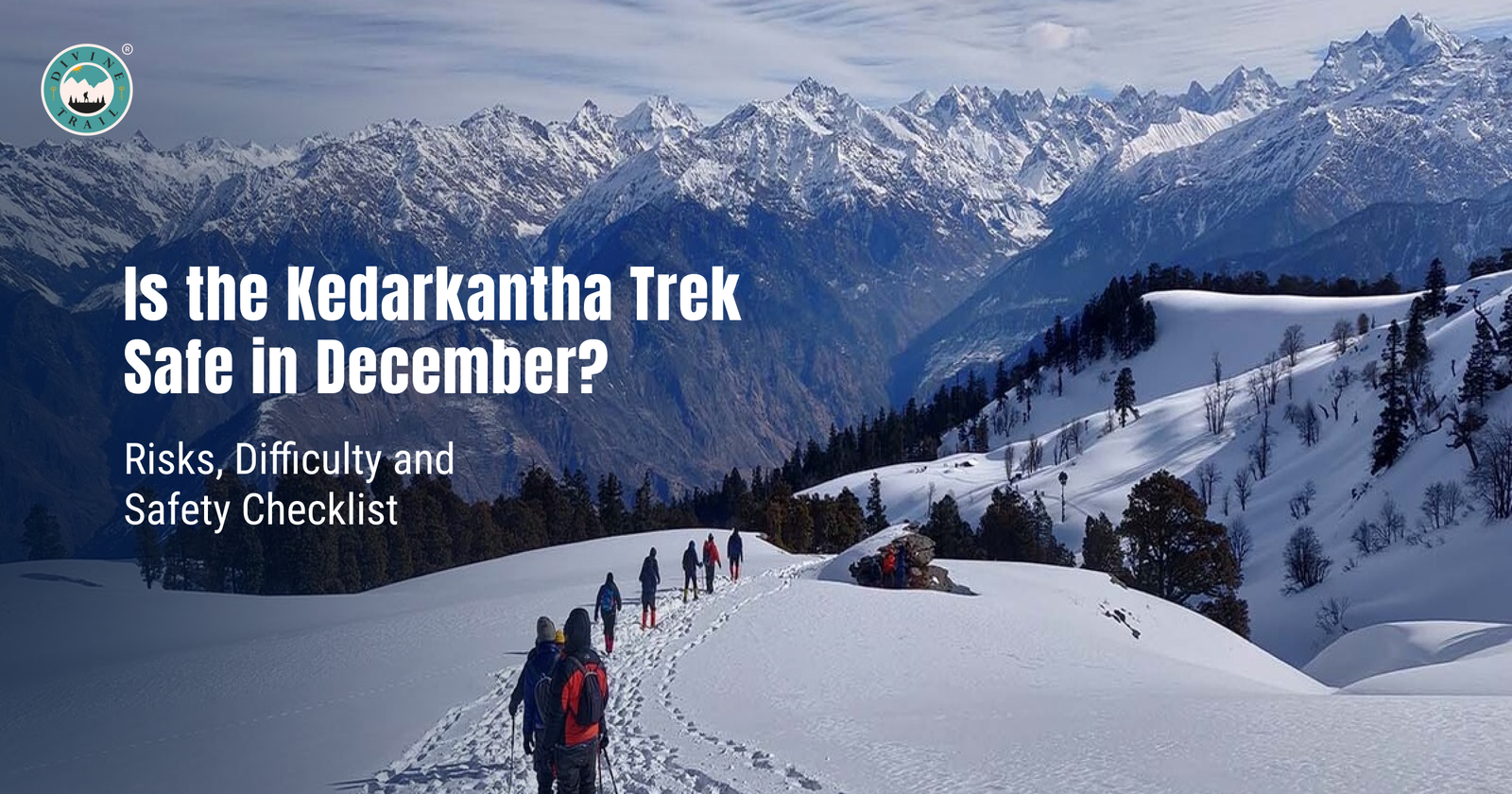
Is the Kedarkantha Trek Safe in December? Risks, Difficulty and Safety Checklist
Quick answer: Kedarkantha is generally considered safe for fit first-timers in December when you go with a registered operator, but it is not risk-free. The main risks are cold, slippery snow, altitude sickness and limited medical access. Most can be managed with preparation, slow pacing and a well-equipped team.
Last updated: 3 November 2026.
If you are asking “is Kedarkantha trek safe in December?”, the short answer is mostly yes, with caveats. Kedarkantha is often called India’s best beginner snow trek, and that reputation is mostly deserved. But December adds real winter risks, and an honest answer should name them. This guide covers what can go wrong, how hard the trek really is, and what to ask before you book.
What are the real risks on Kedarkantha in December?
- Cold: nights at the higher camps are well below freezing, so poor layering can lead to hypothermia.
- Slippery snow and ice: the summit day and the descent are the usual trouble spots, which is why microspikes or crampons and gaiters matter.
- Altitude sickness (AMS): it can start above about 8,000 ft, and this trek goes from roughly 6,400 ft at Sankri to 12,500 ft at the summit.
- Weather changes: snow and wind can arrive quickly, and batches are sometimes delayed or turned back.
- Remote medical access: the trail is far from a hospital, and doctors do not normally walk with a group.
Kedarkantha trek difficulty in December: how hard is it?
Indiahikes rates Kedarkantha as easy in summer and moderate in winter. The daily distances are short, but snow slows you down, and the gain is steady: about 2,650 ft on day one from Sankri to Juda ka Talab, then the climb to 12,500 ft over the next two days. A common fitness benchmark is jogging about 5 km in under 40 minutes after three to four weeks of cardio and stair training, which is what we recommend for the Kedarkantha trek for beginners. For the dates and the daily plan, see the Kedarkantha trek itinerary.
Who should talk to a doctor first?
One operator advises people with heart or respiratory conditions to avoid the trek. Anyone with high blood pressure, asthma or another medical condition should get a doctor’s opinion before booking. Age limits depend on the operator, and published limits range from about 11 or 15 years up to 18 years.
How to lower your risk
- Walk slowly on day one and drink water regularly.
- Tell your trek leader early about headache, nausea, dizziness or unusual tiredness. Do not hide symptoms to stay in the group.
- Wear layers you can add and remove, and keep your gloves and socks dry.
- Follow the leader’s decision on turning back, even if the summit is close.
- If you want to use altitude medication, take it only on a doctor’s advice.
Questions to ask your operator before you book
- Do you carry a pulse oximeter, first-aid kit and oxygen cylinder, and is the leader first-aid certified?
- What is the evacuation plan, and who pays for it?
- What is the group size and the trek-leader-to-trekker ratio?
- What happens if weather stops the batch? Do I get a refund or a new date?
Our checklist on how to choose a trekking company in Uttarakhand covers the full list. Rules around permits and guides are also changing, so read Uttarakhand trekking rules for 2026. To plan dates, see Kedarkantha in December.
Frequently asked questions
Is the Kedarkantha trek safe in December?
It is considered safe for fit first-timers when done with a registered operator and an experienced leader, but winter adds risks such as cold, icy trails and altitude sickness. Preparation and slow pacing reduce most of them.
How difficult is the Kedarkantha trek in December?
It is usually rated easy in summer and moderate in winter. Snow makes walking slower and the summit day tiring, but the daily distances are short.
Can beginners do Kedarkantha in winter?
Yes. It is one of India’s most popular first snow treks. Beginners should build cardio fitness for three to four weeks and follow their trek leader’s advice on pace and layers.
What is the biggest risk on the Kedarkantha trek?
Altitude sickness and cold are the most common concerns. The trek climbs from about 6,400 ft at Sankri to 12,500 ft at the summit, so a slow pace, enough water and early reporting of symptoms matter.
Is there medical help on the Kedarkantha trek?
Trek teams usually carry first aid, a pulse oximeter and an oxygen cylinder, but doctors do not normally walk with the group and the trail is remote. Ask your operator about the evacuation plan and who pays for it.
What is the minimum age for the Kedarkantha trek?
It depends on the operator, and published limits range from about 11 or 15 years up to 18 years. A draft state framework also reportedly proposes 14 as a minimum age for some high-altitude activities.
Sources
Indiahikes, Kedarkantha winter guide · Himalaya Shelter, Kedarkantha trek · Tripoto, operator safety terms · Curly Tales, proposed Uttarakhand rules