
Kedarkantha Trek 2026–27: Complete Guide (Itinerary, Best Time & Cost)
Winter Trekking · Uttarakhand
Quick answer: The Kedarkantha trek is a 6-day, easy-to-moderate winter trek to a 12,500 ft summit, starting and ending at Sankri village in Uttarakhand. It’s the most popular beginner snow trek in India — the “Queen of Winter Treks” — best done December to February for deep snow, or in autumn (October–November) for clear skies without the cold. No technical skills are needed; a few weeks of basic cardio is enough.
We run Kedarkantha departures from our Dehradun base through the season. This guide covers the itinerary, best time, difficulty, temperature and what to budget — everything you need before you book.
| Detail | Figure |
|---|---|
| Summit altitude | ~12,500 ft (3,810 m) |
| Base village | Sankri (~6,400 ft) |
| Duration | 6 days (travel included) / ~4 days trekking |
| Trek distance | ~20 km round trip |
| Difficulty | Easy–Moderate (beginner-friendly) |
| Best time | Dec–Feb (snow) · Oct–Nov (clear views) · Mar–Apr (spring) |
| Region | Govind Wildlife Sanctuary, Uttarkashi |
What is the Kedarkantha trek?
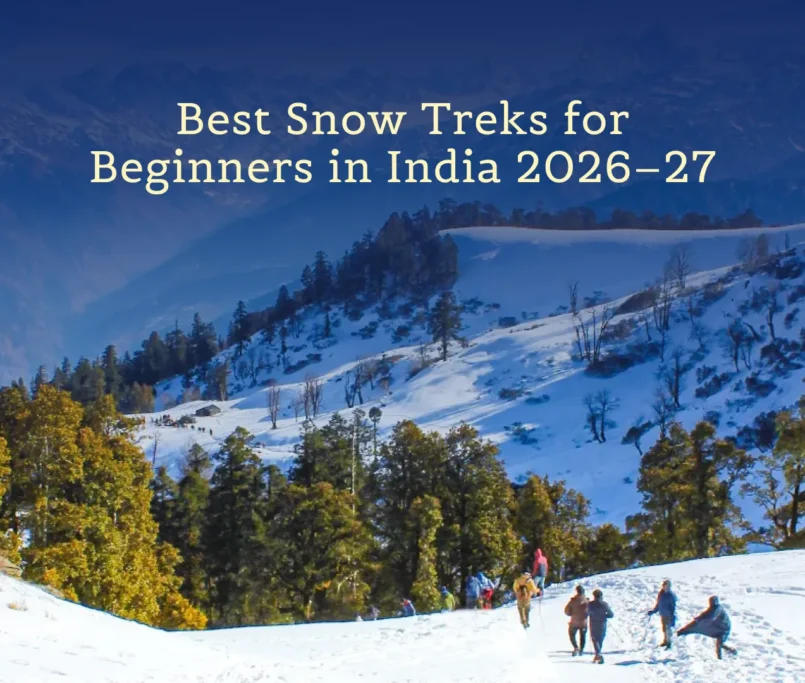
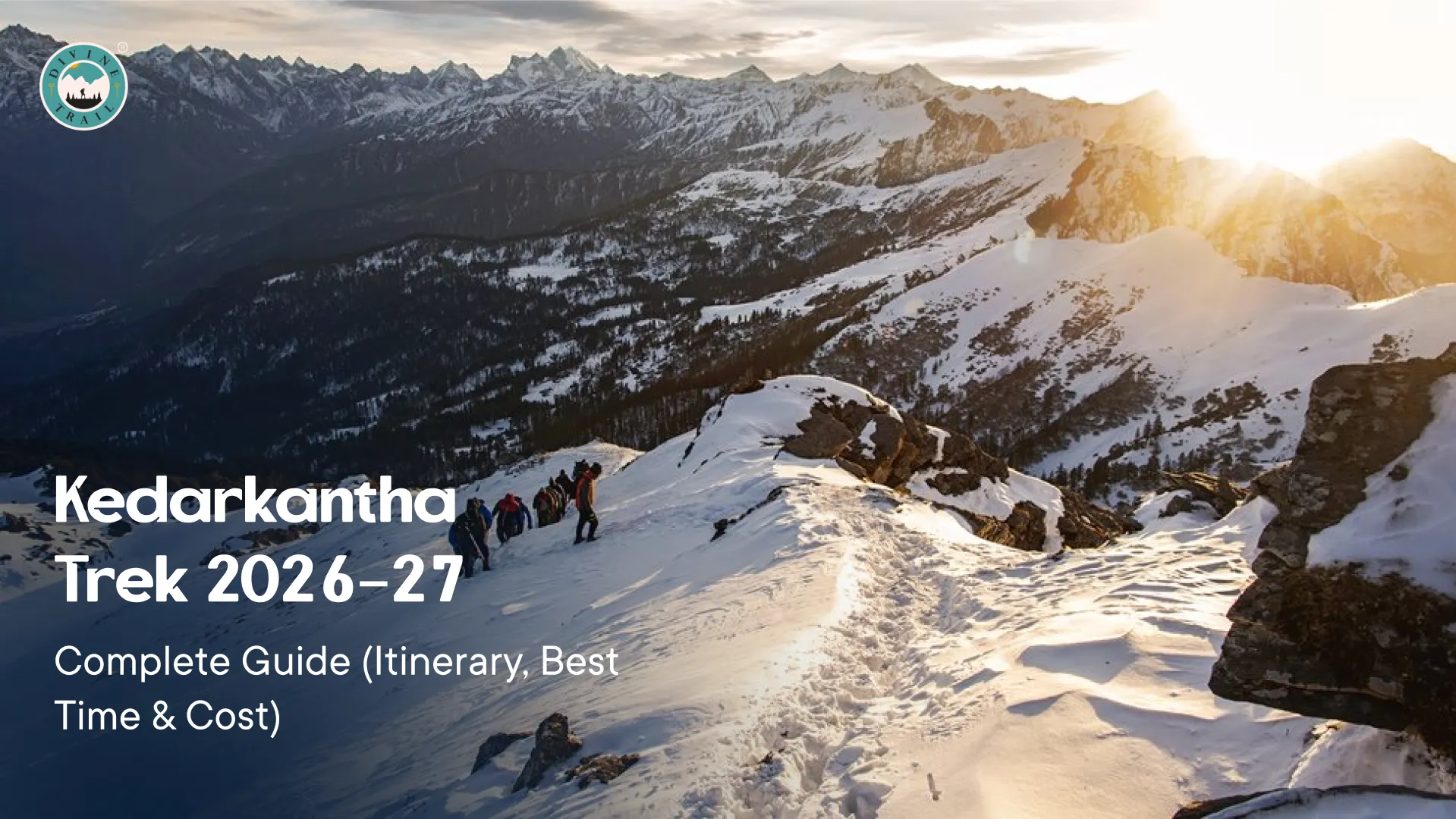
Kedarkantha is a Himalayan summit trek in the Govind Wildlife Sanctuary, Uttarkashi, reaching about 12,500 ft. It begins at Sankri — a roughly 10-hour drive from Dehradun — and climbs through pine and oak forest to the clearing of Juda-ka-Talab, then up to the base camp and the final summit ridge. In winter the entire trail is blanketed in snow, which is exactly why it’s the most sought-after first snow trek in the country.
Kedarkantha trek itinerary (6 days)
- Day 1: Dehradun to Sankri (~10 hr drive); overnight at Sankri guesthouse.
- Day 2: Sankri to Juda-ka-Talab (~4 km); camp by the frozen lake clearing.
- Day 3: Juda-ka-Talab to Kedarkantha base camp (~4 km); acclimatise.
- Day 4: Summit day — base to Kedarkantha peak (12,500 ft) and descend to Juda-ka-Talab or Hargaon (~6–7 hr).
- Day 5: Trek down to Sankri; overnight.
- Day 6: Drive back to Dehradun.
Exact camps and dates for the 2026–27 season are on our Kedarkantha itinerary page.
What is the best time for the Kedarkantha trek?
December to February is the best time for the classic snow experience — deep snow on the trail and summit, and snow camping. October to November gives you clear post-monsoon views and golden forests with little or no snow, which suits anyone who wants the summit without the deep cold. March to April brings a greener, milder spring trek. For a fuller seasonal comparison across the region, see our guide to the best winter treks in India 2026–27.
How difficult is the Kedarkantha trek?
Kedarkantha is graded easy-to-moderate. The daily distances are short and the ascent is gradual, with well-spaced camps for acclimatisation. The one genuinely demanding stretch is the summit push, which is steep and, in winter, done on snow using crampons. No prior trekking or technical experience is required — just basic fitness.
Kedarkantha temperature and what to expect
In peak winter (December–February), expect daytime temperatures around 8–15°C and nights dropping to roughly 0 to −10°C at the higher camps. Autumn nights are milder, around 0 to −5°C. December has short daylight hours, so summit mornings start early. This is a real cold-weather trek — proper layering matters.
How much does the Kedarkantha trek cost?
As a market reference, Delhi-to-Delhi Kedarkantha packages typically run around ₹11,000–13,000 for 5–6 days, while trips starting from Dehradun or Sankri are usually lower. Watch for extras most listings hide: backpack offloading (around ₹1,200 booked in advance, more on the spot), forest/entry charges, and travel insurance. For exact 2026–27 pricing on our Dehradun departures, contact Divine Trail directly.
What should I pack?
Insulated layers and a down jacket, waterproof trekking shoes with ankle support, gaiters (essential for snow), thermal inners, a warm hat and gloves, sun protection and a headlamp. We provide tents, cold-rated sleeping bags, crampons and all meals on the trek, so you carry only your personal gear. Build 3–4 weeks of cardio and leg strength before your date.
More winter treks to pair with Kedarkantha
Once you’ve done Kedarkantha, the natural next steps are the frozen-lake Brahmatal Trek, the panoramic Kuari Pass Trek, or the short Chopta–Chandrashila summit.
Frequently asked questions
How difficult is the Kedarkantha trek?
The Kedarkantha trek is graded easy-to-moderate and is considered one of the best beginner winter treks in India. The summit push is the only steep section; with basic fitness and no technical skills, most first-timers complete it comfortably.
What is the best time for the Kedarkantha trek?
December to February is the best time for snow, when the whole trail from Juda-ka-Talab to the summit is covered. Mid-September to November gives clear skies and golden forests with little snow, and March–April offers a greener spring trek.
How many days is the Kedarkantha trek?
The Kedarkantha trek is typically a 6-day trip including travel, or about 4 days of actual trekking, starting and ending at Sankri village in Uttarakhand.
What is the altitude of the Kedarkantha summit?
The Kedarkantha summit stands at about 12,500 ft (3,810 m). The trek starts from Sankri at roughly 6,400 ft and gains altitude gradually through Juda-ka-Talab and the base camp.
How cold does the Kedarkantha trek get?
In December–February, daytime temperatures are around 8–15°C and nights drop to roughly 0 to −10°C at the higher camps. Autumn nights are milder, around 0 to −5°C.
Is the Kedarkantha trek suitable for first-timers?
Yes. Kedarkantha is widely regarded as the ideal first Himalayan snow trek, thanks to its gradual trail, well-spaced camps and strong support infrastructure. A few weeks of basic cardio is enough preparation.