
Himalayan Pilgrimage Tours
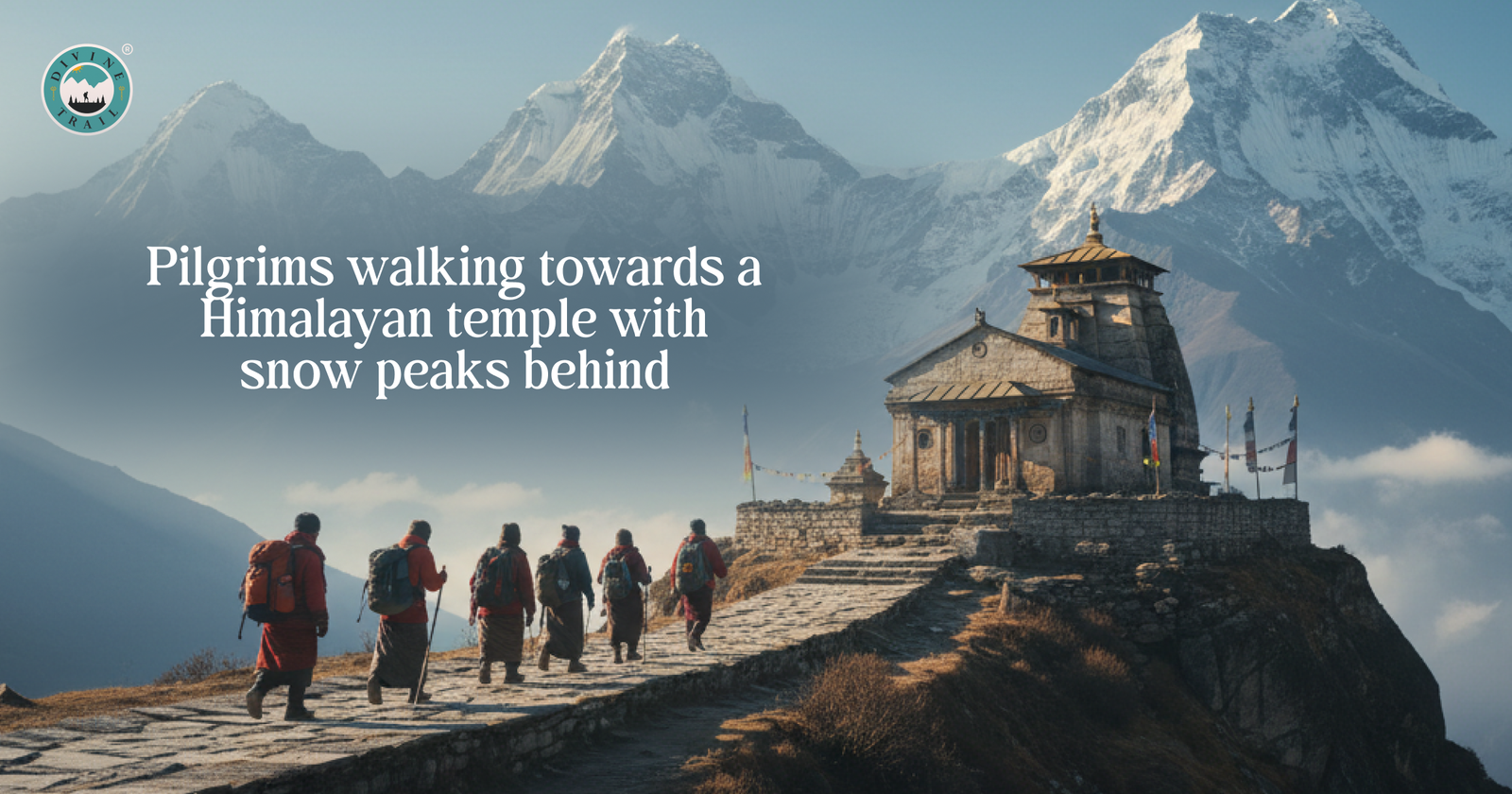
A Himalayan pilgrimage is not a temple visit with a scenic backdrop. Most of these routes involve days of road travel, altitude that affects everyone, and stretches you can only cover on foot. That is the point. The difficulty is part of the devotion.
Here are the major ones, what each involves, and how to work out which suits you.
The major Himalayan pilgrimages
Char Dham Yatra
The circuit of Yamunotri, Gangotri, Kedarnath and Badrinath, and the best known pilgrimage in Uttarakhand. Divine Trail runs it over 9 days and 10 nights, with longer variants of 10 and 12 days that add Chopta, Tungnath and Triyuginarayan.
Season: late April or early May to late October. Physical demand: moderate. Long road days, plus a walk to Kedarnath and a climb to Yamunotri.
Do Dham Yatra
Kedarnath and Badrinath only. Six days and five nights, and the sensible option when you do not have ten days. Variants add Kalpeshwar, or a second Kedar, or a Rishikesh extension.
Season: same as Char Dham. Physical demand: moderate.
Kedarnath Yatra
Just Kedarnath, over 5 days and 4 nights. The temple is one of the twelve Jyotirlingas and the approach involves a climb that most pilgrims walk, though ponies and palanquins are available.
Season: late April to late October. Physical demand: moderate. The climb is the whole challenge.
Panch Kedar and Panch Badri
The most demanding pilgrimage in Uttarakhand. Fourteen days covering all five Kedar shrines and all five Badri shrines, including Rudranath and Kalpeshwar, which need real trekking to reach.
Season: May to October. Physical demand: high. Several days of trekking at altitude.
Adi Kailash and Om Parvat
Six days and five nights into the Kumaon region near the Tibet border, to the peak known as Chota Kailash and to Om Parvat, where snow settles in the shape of the sacred syllable. Less crowded than anything else on this list.
Season: May to October. Physical demand: moderate to high. Sustained altitude.
Kailash Mansarovar Yatra
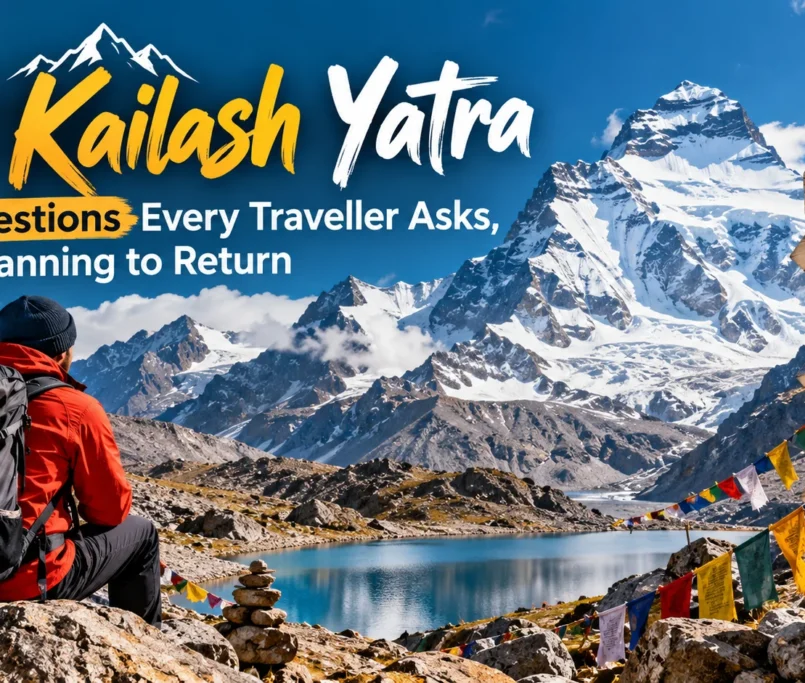
The one that stands apart. Fourteen days, travelling through Nepal into Tibet, ending with the 52 km parikrama around Mount Kailash that crosses Dolma La at 5,630 metres, higher than Everest Base Camp on the Nepal side.
Season: May to October. Physical demand: high. This one needs preparation.
Which yatra suits which traveller
First pilgrimage, limited days: Kedarnath or Do Dham. The complete Uttarakhand circuit: Char Dham. You have done Char Dham and want more: Panch Kedar and Panch Badri, or Adi Kailash. You want the hardest one: Kailash Mansarovar. Travelling with elderly family: Do Dham, or Char Dham with the helicopter segments. Avoid the trekking-heavy routes.
Physical demands compared
| Pilgrimage | Duration | Max altitude | Walking involved |
| Kedarnath | 5D / 4N | Approx 11,750 ft [verify] | One long climb |
| Do Dham | 6D / 5N | Approx 11,750 ft [verify] | One long climb |
| Char Dham | 9D / 10N | Approx 11,750 ft [verify] | Two climbs, long road days |
| Adi Kailash | 6D / 5N | [verify] | Moderate daily walking |
| Panch Kedar & Panch Badri | 14D / 15N | [verify] | Several trekking days |
| Kailash Mansarovar | 14 days | 5,630 m at Dolma La | 52 km parikrama |
Permits and registration
Uttarakhand yatras need registration with the state tourism department, and a health check is mandatory for Kedarnath and Badrinath. Registration opens ahead of each season and slots for peak weeks go quickly.
Kailash Mansarovar is a different process altogether. It needs a Chinese group visa and a Tibet travel permit, both filed for the whole batch together, which is why booking three to four months ahead matters. Divine Trail handles the filing.
Frequently asked questions
Which Himalayan pilgrimage is easiest?
Do Dham, or Kedarnath alone. Shortest, least altitude, least walking.
How fit do I need to be?
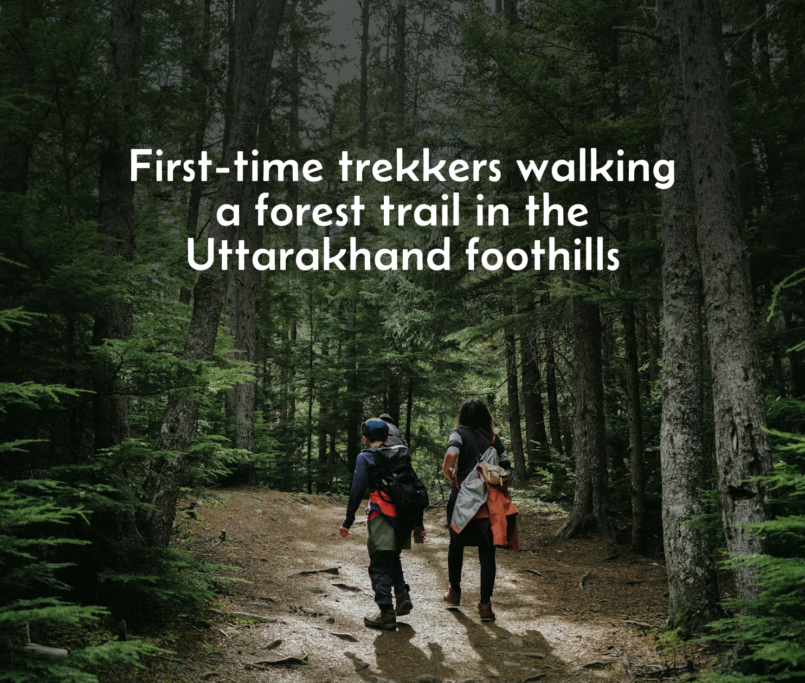
For Uttarakhand yatras, able to walk several hours on an incline. For Kailash Mansarovar, considerably fitter, and a medical clearance is sensible.
When do the Char Dham temples open?
Around Akshaya Tritiya in late April or early May, closing around Diwali. Exact dates are announced each year.
Can elderly pilgrims do these?
Many do. Helicopter options exist for parts of the Char Dham circuit. The trekking-heavy routes are not suitable.
Do I need a visa for Kailash Mansarovar?
Yes. A Chinese group visa plus a Tibet travel permit, both arranged once the batch is confirmed.